
Engineered vs. Solid Hardwood: Which Is Best for Greensboro Homes?
A local guide to choosing between engineered and solid hardwood flooring in the Piedmont Triad’s climate.
Both engineered and solid hardwood are real wood floors — the difference is in how they’re constructed, where they can be installed, and how they hold up to North Carolina’s humidity swings. Here’s how to choose the right one for your Greensboro home.
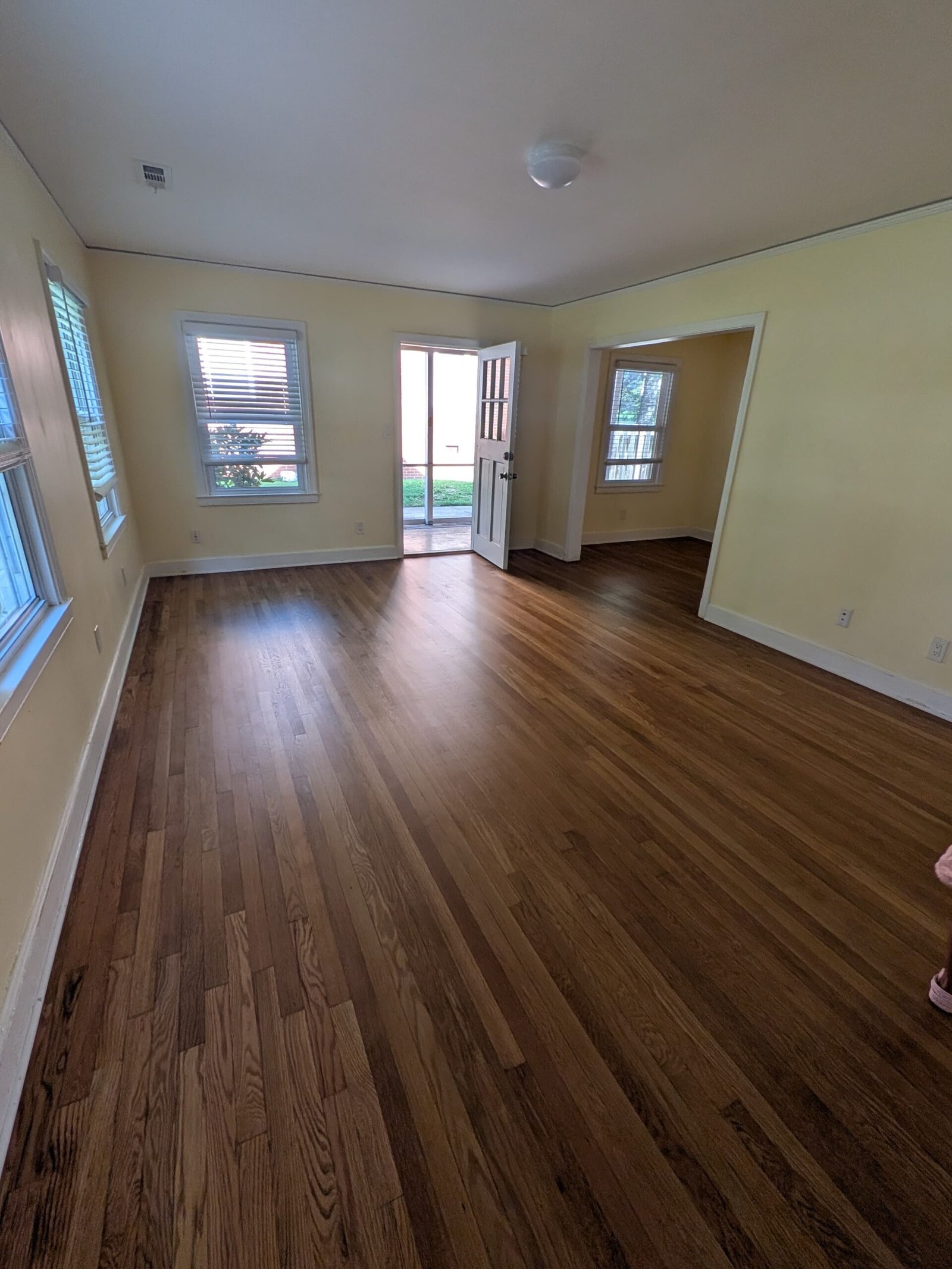
What’s the Difference?
Solid hardwood is a single, solid piece of wood from top to bottom. It can be sanded and refinished many times over its lifespan, often lasting generations with proper care.
Engineered hardwood has a real hardwood veneer layer bonded on top of multiple plywood or high-density fiberboard layers. This cross-layered construction makes it more dimensionally stable — it resists expanding and contracting with humidity changes better than solid wood.
Pros & Cons at a Glance
Solid Hardwood
- Can be refinished multiple times over decades
- Classic, timeless look and feel; adds strong resale value
- More sensitive to humidity and moisture — not recommended below grade
- Best on main and upper levels with a stable subfloor
Engineered Hardwood
- More stable in fluctuating humidity — better for basements and homes over crawl spaces
- Can often be installed over concrete slabs and, in some cases, radiant heat
- Can be refinished a limited number of times depending on veneer thickness
- Wide range of wood species and finishes, visually indistinguishable from solid wood
Not sure which option is right for your home?
We’ll help you decide with a free in-home visit, at no cost or obligation.
☎ Call Now (336) 951-8772Best for Basements & Below-Grade Spaces
Many Greensboro homes have basements or crawl space foundations where moisture and temperature swings are harder to control. In these areas, engineered hardwood is almost always the safer choice — its layered construction resists the cupping and buckling that solid wood is prone to in higher-humidity environments.
Which Should You Choose in the Piedmont Triad Climate?
For main living areas with good climate control, solid hardwood remains an excellent long-term investment that can be refinished for generations. For basements, homes over crawl spaces with limited ventilation, or rooms with less climate stability, engineered hardwood offers the real-wood look with far better resistance to North Carolina’s humid summers and drier winters. Many of our Greensboro clients use solid hardwood upstairs and engineered hardwood on lower levels for the best of both.
Not sure which option is right for your home?
We’ll walk your space and recommend the best fit, free of charge.
Call (336) 951-8772Frequently Asked Questions
Is engineered hardwood as durable as solid hardwood?
Engineered hardwood is often more resistant to humidity-related warping, though it can typically be refinished fewer times than solid wood depending on the thickness of its top veneer layer.
Can I install solid hardwood in my basement?
It’s generally not recommended. Basements and below-grade spaces have less stable humidity, and engineered hardwood is a much safer choice in those areas.
Does engineered hardwood look different from solid hardwood?
No. Engineered hardwood has a real wood surface layer, so once installed it looks and feels the same as solid hardwood.